Why Is My Restaurant Not Showing on Google? (9 Reasons + How to Fix Each One)
If customers can’t find your restaurant on Google, they’re eating at a competitor who figured this out first. The hard truth is that Google does not rank restaurants by how good the food is – it ranks them by how strong their digital signals are. The good news: every reason your restaurant is invisible on Google is fixable, and most fixes cost nothing but time.
This guide covers the 9 most common reasons restaurants disappear from Google Search and Maps, with a specific action for each one. At the bottom, you’ll find a quick-reference checklist to audit your own visibility right now.
1. Your Google Business Profile Is Not Verified
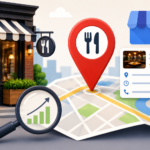
This is the single most common reason a restaurant doesn’t appear in Google Maps or the local pack. Google Business Profile (GBP) is the free listing that powers everything – your address pin, your hours, your photos, your reviews. Without it verified, you simply don’t exist to Google’s local algorithm.
Many owners assume that because their restaurant shows up somewhere on Google, they’re set. Not necessarily. A listing can exist and still be unverified – meaning Google treats it as low-confidence data and won’t rank it prominently.
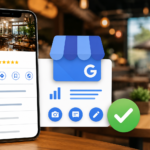
The fix: Go to business.google.com, search for your restaurant, and claim it if it already exists. Choose the verification method (video verification is now the most common), and complete the process. Allow 3–7 days for the listing to stabilize after verification.
2. Your Profile Is Incomplete
Verification is the entry ticket. Completeness is what earns you a ranking. Google’s own documentation confirms that complete profiles receive significantly more clicks, calls, and direction requests than incomplete ones.
Common fields restaurants leave empty: business description, secondary categories, menu link, hours for holidays, service options (dine-in, takeout, delivery), and attributes (parking, outdoor seating, accepts reservations). Each missing field is a missed signal.
The fix: Fill out every single field in your Google Business Profile dashboard. Add at least 10 photos (exterior, interior, food, team). Upload a menu or link to it. Set accurate hours – including special holiday hours. The more complete your profile, the more confident Google becomes in showing it.
3. Your Business Information Is Inconsistent Across the Web
Google does not just look at your GBP. It crawls the entire web and cross-references your restaurant’s name, address, and phone number (collectively called NAP) across Yelp, TripAdvisor, Facebook, OpenTable, Foursquare, local directories, and your own website.
If any of those sources show a different phone number, a slightly different address format, or an old name from before a rebrand – Google interprets that inconsistency as a trust signal problem and ranks you lower. Even differences as small as “Ave” vs. “Avenue” or a missing suite number can cause this.
The fix: Search your restaurant name on Google and audit every listing that appears. Claim and correct your profiles on Yelp, TripAdvisor, Facebook, OpenTable, and Foursquare at minimum. Make sure the name, address, and phone number are character-for-character identical across every platform. This process is tedious but delivers lasting results.
4. You Have Too Few Reviews – or You’re Not Responding to Them
Reviews account for a significant portion of Google’s local ranking algorithm. But it’s not just about quantity. Recency matters – 40 reviews from the last three months outperform 200 reviews from three years ago. And response rate matters. When you reply to reviews (positive and negative), Google registers that as activity and engagement, which boosts your prominence score.
Beyond rankings, the majority of diners check reviews before choosing a restaurant. A dormant review profile with no owner responses signals that no one is minding the business.
The fix: Build a simple system for requesting reviews. Train your front-of-house team to mention it after a positive experience. Add a QR code linking to your Google review page on table cards or receipts. Respond to every review within 48 hours – even a two-sentence thank-you on a five-star review signals activity to Google’s algorithm.
5. Your Profile Looks Inactive to Google
Google favors businesses that demonstrate they are actively open and operating. A profile with no posts, no new photos, and no recent review responses looks abandoned – even if your restaurant is packed every night.
Google Posts are a chronically underused feature. They appear directly on your Google listing and give you a free channel to announce specials, events, limited-time menus, and holiday hours. Profiles that post regularly (at minimum twice a month) show measurably stronger local visibility.
The fix: Commit to posting on your Google Business Profile at least twice per month. Add new photos every two weeks – food shots, seasonal decor, staff. Update your hours proactively around holidays. Treat your GBP like a second social media channel, because to Google, it functions exactly like one.
6. Your Website Has Local SEO Problems
Your Google Business Profile and your website work as a team. If your website doesn’t reinforce the local signals Google needs, your overall ranking suffers – even with a perfect GBP.
Common website issues that hurt restaurant local SEO: no title tag or meta description with your city and cuisine type, no Schema markup (LocalBusiness or Restaurant structured data), slow mobile load times, and no dedicated page mentioning your neighborhood or area.
The fix: Make sure your website’s homepage title tag includes your restaurant name, cuisine type, and city. Add a Restaurant Schema markup to your site – this structured data helps Google understand exactly what kind of business you are. Run your site through Google’s PageSpeed Insights and fix any mobile performance issues. If you have multiple locations, each one needs its own dedicated landing page.
7. You Have No Local Authority Beyond Your Own Profiles
Prominence – one of Google’s three core local ranking factors – measures how well-known your restaurant appears to be across the broader web. It’s built by earning mentions and links from sources Google already trusts: local news sites, food blogs, neighborhood associations, event listings, Miami-specific publications, and local business directories.
A restaurant with one mention in the Miami Herald and a feature on a local food blog will consistently outrank one that has no digital presence beyond its own website and GBP, even if both profiles are equally optimized.
The fix: Contact local food bloggers and journalists about your story. Submit your restaurant to local event calendars and Miami dining guides. Partner with neighborhood associations on community events. Every legitimate mention of your restaurant name and website URL on an outside source builds the authority Google needs to rank you confidently.
8. Your Profile May Be Suspended or Penalized
Google can suspend a Google Business Profile for policy violations – and often does so without sending a clear notification. Common causes: using keywords in your business name that aren’t part of your legal name (e.g., “Best Miami Steakhouse” instead of your actual restaurant name), using a P.O. box or virtual address, having duplicate listings, or accumulating spam flags from competitors or users.
A suspended profile disappears from Maps entirely. Many restaurant owners don’t realize this has happened because they’re not monitoring their listing regularly.
The fix: Check your GBP dashboard for any suspension notices. If suspended, identify the policy violation, correct it, and submit a reinstatement request through the Google Business Profile Help Center. Reinstatement typically takes 5–14 business days. Going forward, do not add keywords to your business name and do not create duplicate listings – these are the two most common triggers.
9. You’re Not Optimized for AI Overviews and “Ask Google”
This is the visibility gap most restaurant owners don’t know exists yet. As of 2026, AI Overviews now appear on more than 78% of restaurant-related Google searches. These are the AI-generated answer blocks that appear above the traditional results. If your restaurant isn’t structured to feed data to these systems, you’re invisible in an increasingly large portion of search real estate.
Google’s Ask Maps recommendation engine – which powers the “What’s a good restaurant for a first date near me?” type queries – gives significant weight to the specific language used in your reviews. Mentions of dishes by name, atmosphere descriptions, and occasion types (“great for business lunch,” “perfect for large groups”) all teach the AI what your restaurant is best for.
The fix: Add FAQPage Schema markup to your website with clear questions and answers about your menu, hours, parking, and dining experience. Encourage customers to mention specific dishes and occasions in their reviews. Publish a brief FAQ section on your website answering the questions Google’s AI is designed to surface. This is now a standard part of restaurant local SEO in 2026.
Your Restaurant Google Visibility Checklist
Use this checklist to audit your current standing. Every unchecked item is a ranking opportunity.
Google Business Profile
- Profile is claimed and fully verified
- Business name matches your legal/signage name exactly (no added keywords)
- Primary and secondary categories are accurate and specific
- Address, phone number, and website URL are correct
- Hours are complete, including holiday hours
- Business description is written (750 characters, uses natural language)
- Menu is uploaded or linked
- Service options selected (dine-in, takeout, delivery, reservations)
- At least 10 photos uploaded (mix of food, exterior, interior)
- New Google Post published within the last 30 days
- All reviews have an owner response
NAP Consistency
- Name, address, and phone are identical on: Yelp, TripAdvisor, Facebook, OpenTable, Foursquare
- Website footer shows the same address and phone as GBP
- No duplicate GBP listings exist
Website Local SEO
- Homepage title tag includes restaurant name + cuisine + city
- Restaurant Schema markup (LocalBusiness or Restaurant type) is implemented
- FAQPage Schema is present with at least 4–5 relevant Q&As
- Mobile PageSpeed score is above 70 (test at pagespeed.web.dev)
- Each location has its own dedicated page (for multi-location restaurants)
Reviews and Authority
- Minimum 25 Google reviews, with at least 10 in the past 6 months
- Average rating of 4.0 or above
- Review request system is in place (QR code, email follow-up, or staff prompt)
- Restaurant is mentioned on at least 2–3 external websites (blogs, local press, directories)
AI and Emerging Visibility
- FAQ section exists on website answering common diner questions
- FAQPage Schema is implemented on those Q&As
- Recent reviews mention specific dishes and dining occasions
When DIY Stops Working
Most of the fixes above are things any restaurant owner or manager can do without outside help. But local SEO compounds. What gets you from invisible to visible is not one fix – it’s 15 fixes done consistently over 60 to 90 days, while tracking what’s working and adjusting.
If you’ve gone through this checklist and your restaurant is still not showing up where it should, the issue is usually one of two things: a citation problem buried deep in obscure directories, or a competitor who has simply built more authority and reviews over time. Both are recoverable – but they require a systematic approach, not a one-time fix.
RS360 is a restaurant marketing agency based in Miami, FL that specializes in exactly this kind of work – diagnosing why a restaurant isn’t ranking and building the local presence that gets it found. If you’d like a free visibility audit for your restaurant, reach out here. No pitch, just an honest look at where you stand.